The Emerging Knowledge Management Architecture
Why monolithic "second brain" tools fail, and what the next generation of knowledge management looks like. The specialist era has arrived—and context is the competitive moat.
Rahul Kumar
Founder, Timeln
The "second brain" conversation is no longer theoretical. It's here, and everyone's building their version.
Productivity platforms like Notion and Obsidian are adding AI layers. Startups like Reflect and Mem are rebuilding note-taking from the ground up with embeddings. Enterprise search vendors are pivoting to "personal knowledge management." Even model providers like OpenAI and Anthropic are launching memory APIs.
This proliferation makes sense. We're drowning in information but starving for connections. Powerful AI models alone won't transform how we work with knowledge. You need a full stack.
But here's what most builders are getting wrong: monolithic architectures don't work. When one tool tries to own every layer of the knowledge stack, they end up mediocre across the board.
The Evernote Trap: Why Owning Everything Means Owning Nothing
Evernote is the cautionary tale every knowledge worker should study.
At its peak, Evernote tried to be everything: capture, organization, sync, search, collaboration, sharing, web clipper, mobile app, desktop app, templates, presentation mode. They owned every layer of the knowledge stack. And they lost to specialists at each one.
- Structured knowledge? Notion won.
- Email management? Superhuman won.
- Team communication? Slack won.
- Writing? Google Docs and Notion won.
- Research and linking? Obsidian and Roam won.
Evernote became a legacy product that power users were actively trying to escape. Not because they didn't ship features—they did. But because when you try to own every layer, you can't be excellent at any single layer.
The pattern repeats today. New entrants are making the same mistake: building monolithic tools that promise to "do it all." Capture, organize, search, share, collaborate, AI chat, task management, calendar integration.
The market has spoken: specialists win.
The Six Layers of the Modern Knowledge Stack
The knowledge management stack isn't abstract theory. It's already crystallizing into distinct layers, each with different technical requirements and competitive dynamics.
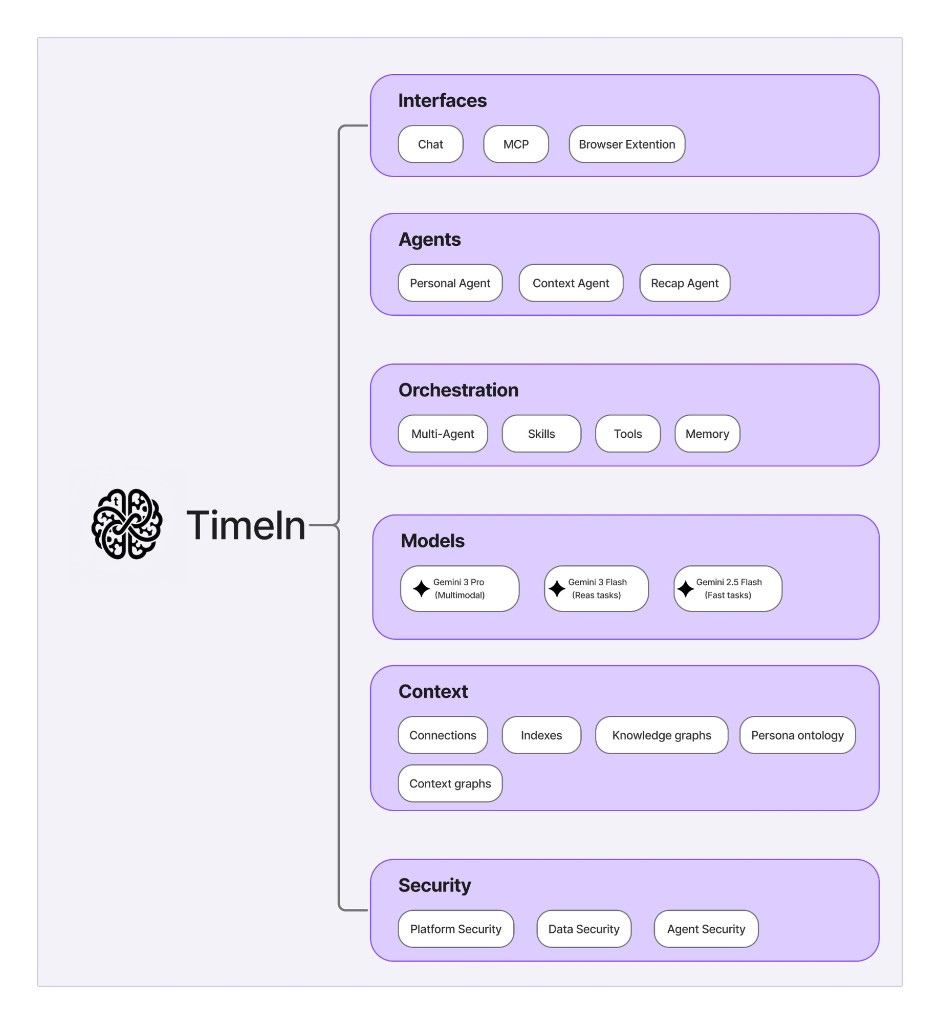
1. Interfaces — How You Interact
The entry points to your knowledge system: chat interfaces, browser extensions, MCP (Model Context Protocol) integrations, mobile apps, APIs.
The trap: Most tools build their own interface and then try to force you to use only that. But knowledge workers don't live in one place. You clip from Chrome, voice-record from your phone, highlight in PDFs, save from Slack.
The solution: Multi-interface by design. Meet users where they already work.
2. Agents — The Intelligence Layer
Personal agents that understand your intent, context agents that pull relevant information, recap agents that synthesize what you've learned. These are the AI systems that act on your behalf.
The trap: Building agents without context. An agent that doesn't know what you already know can't help you think. Most "AI assistants" are stateless—they start from zero every time.
The solution: Agents that operate on top of your persistent knowledge graph, with access to what you've saved, what you care about, and how ideas connect.
3. Orchestration — How Agents Work Together
Multi-agent coordination, skills libraries, tool access, memory systems. This is the layer that routes tasks to the right agent, manages context windows, and ensures agents can collaborate.
The trap: Single-agent systems that try to do everything. Or worse: multiple disconnected AI features that don't talk to each other.
The solution: A coordination layer that treats knowledge work as multi-step reasoning, not one-shot queries. Orchestration that preserves context across sessions.
4. Models — Best-Fit LLMs for Different Tasks
Multimodal models for understanding images and video. Fast models for quick reads and classification. Deep reasoning models for synthesis and connections. Different tasks need different models.
The trap: Locking into one model provider. GPT-4 is great for reasoning but expensive for classification. Gemini excels at multimodal but you might want Claude for writing. Model capabilities shift every quarter.
The solution: Model-agnostic architecture. Use the best tool for each job. Stay flexible as the model landscape evolves.
5. Context — The Semantic Foundation
This is your competitive advantage. Connections, indexes, embeddings, knowledge graphs, persona ontology. The semantic layer that understands what you know, how ideas relate, and what matters to you.
The trap: Treating context as an afterthought. Most tools bolt on "AI features" without rebuilding the underlying data model. You get keyword search with a chat interface, not true semantic understanding.
The solution: Context-first architecture. Build the knowledge graph, maintain the embeddings, track the connections. This layer is what makes everything else intelligent.
6. Security — Platform, Data, and Agent Protection
Platform security (authentication, encryption), data security (privacy, access control, export), agent security (prompt injection protection, guardrails). Non-negotiable for knowledge systems that hold your entire intellectual history.
The trap: Security as compliance theater. Most consumer knowledge tools treat security as "we encrypt in transit" and call it done. But if agents can access your data, who controls those agents? What happens if the company gets acquired? What if a prompt injection leaks your research?
The solution: Security at every layer. Your data encrypted and exportable. Clear policies on model training. Agent-level access controls. Transparency on what happens to your knowledge.
Where Timeln Fits: Owning Context and Orchestration
At Timeln, we don't try to own every layer. We own two critical layers and integrate with best-in-class solutions for the rest.
We Own: Context (Layer 5)
The semantic foundation that makes everything else smart. When you save content to Timeln:
- AI extracts concepts, themes, and entities
- Embeddings capture semantic meaning
- Knowledge graph connects ideas across everything you've saved
- Persona understanding learns what you care about
- Connections strengthen over time (73% of new saves link to existing knowledge)
This isn't a feature you can bolt on. It requires rebuilding the data model from the ground up. Context is our moat.
We Own: Orchestration (Layer 3)
How agents work together with your knowledge. When you ask "what do I know about X?":
- Context agent identifies relevant MindSpaces and connections
- Personal agent synthesizes an answer with sources
- Recap agent can summarize themes across multiple documents
- Memory Map visualizes which ideas informed the answer
Agents stay in sync because they operate on the same knowledge graph. Your context persists across sessions. Intelligence compounds over time.
We Integrate: Everything Else
- Models (Layer 4): We use Gemini for multimodal tasks, Gemini Flash for speed, and stay model-agnostic as the landscape evolves.
- Interfaces (Layer 1): Capture through our browser extension, chat interface, or MCP integration with tools like Cursor.
- Security (Layer 6): Your data encrypted, not used to train models, exportable anytime. You own your knowledge graph.
When one vendor tries to own every layer, they optimize for lock-in.
When you own context and orchestration, you optimize for intelligence.
Why This Architecture Matters for Knowledge Workers
Most "second brain" tools fail not because they lack features, but because they're built on the wrong foundation.
The Old Model: Monolithic Tools
- One interface (their app or nothing)
- One AI model (locked in)
- Manual organization required (folders, tags, links you have to create)
- Shallow context (keyword search with a chat wrapper)
- Static structure (what you set up is what you get)
Result: You spend time maintaining the system instead of using it. Knowledge grows but intelligence doesn't compound.
The New Model: Modular Stack
- Multiple interfaces (capture where you already work)
- Best-fit models (use the right tool for each task)
- Automatic organization (AI structures and connects)
- Deep context (semantic understanding, knowledge graph, persona)
- Dynamic intelligence (agents that improve as you save more)
Result: Zero time organizing. Instant retrieval. Connections you never knew existed. Intelligence that compounds.
What to Look for in Your Knowledge Stack
If you're evaluating knowledge management tools—whether for personal use or your team—here are the questions that matter:
Context Questions:
- Does it build a knowledge graph, or just store documents?
- Can it show connections between ideas, or only search for keywords?
- Does context persist across sessions, or start from zero each time?
- Does the system get smarter as you add more, or stay static?
Architecture Questions:
- Are you locked into one model, or can it use the best LLM for each task?
- Can you capture from multiple interfaces, or only one app?
- Is the system modular, or monolithic?
- What happens if a better model launches next quarter—can you switch?
Security Questions:
- Is your data used to train models?
- Can you export everything you've saved?
- What happens to your knowledge if the company shuts down or gets acquired?
- Are agent interactions logged? Who has access?
Intelligence Questions:
- Do agents have context, or are they stateless?
- Can you ask "what do I know about X?" and get a real answer, or just search results?
- Does it show why it connected two ideas, or is it a black box?
- Can multiple agents work together, or is it single-agent only?
The knowledge stack is no longer a vision. It's here. The question is whether you're building on a foundation that will last.
The Competitive Advantage is Context
AI changed the moat for knowledge work.
It's no longer about who has the best search algorithm or the prettiest interface. Every tool can add AI chat. Every tool can integrate OpenAI's API. Every tool can offer "semantic search."
The moat is context. Specifically:
- How deeply you understand what the user knows
- How richly you connect ideas across their saved knowledge
- How intelligently you route queries to the right agent
- How much the system improves as they use it more
Timeln is built for this new reality. We don't try to own every layer. We own the hardest layer—the semantic foundation that makes everything else intelligent—and we orchestrate agents that operate on that context.
Your knowledge stays with you. The interfaces evolve. The models improve. But the context—the connections, the knowledge graph, the understanding of what you care about—that's your competitive advantage.
We're Building for the Next Era of Knowledge Workers
If you've tried note-taking apps and felt like you were building a filing cabinet, not a second brain—we built Timeln for you.
If you've saved hundreds of articles, videos, and PDFs but can't find or reuse them—we built Timeln for you.
If you want to ask "what do I know about X?" and get an actual answer with sources, not just search results—we built Timeln for you.
The knowledge stack is real. Specialists are winning at each layer. And at Timeln, we're all-in on the layer that matters most: the context that makes you smarter over time.
Try Timeln Free
No credit card required. Start building your second brain in minutes.
What you get:
- Automatic organization (no folders, no tags)
- Knowledge graph that shows hidden connections
- Natural language queries ("what do I know about X?")
- Memory Map that visualizes how ideas connect
- 100 saves/month free forever
Your brain is for having ideas. Timeln is for holding them.